
Have you ever worked on something for so long that you started wondering if it was even worth sharing with the world? You keep improving it, fixing little things, and telling yourself that you’ll share it when it’s finally ready.
But what if you never share it?

What if you spend too long building something that could have helped people, or created employment opportunities, simply because you never gave it a chance to be seen? This is something worth thinking about.
HERE’S A THOUGHT:
Recently, the Lagos Life game got people talking across Nigeria. Created by Nigerian software developer Shalom Rayhamen, the browser-based game allows players to experience a virtual version of Lagos Nigeria, complete with familiar jobs, rent, money, social activities (and decadences), and everyday Lagos life. What attracted many people is how accessible the game is: it can be played directly through your browser.
According to Techpoint Africa, the game attracted more than one million players within three days of its October 1, 2026 launch, based on figures reported from the game’s dashboard.
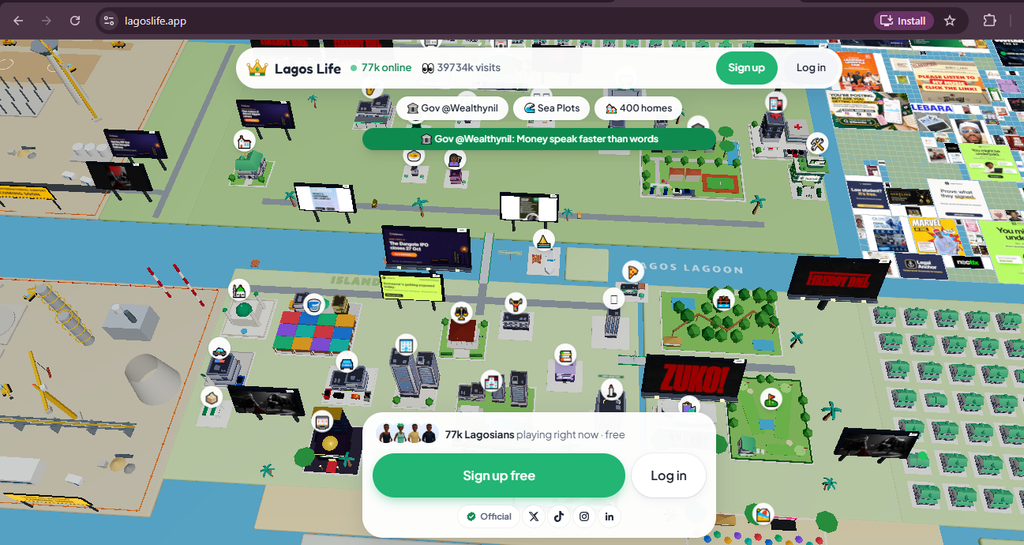
Think about that for a moment. Someone had a brilliant idea for a Sims-style game, developed it, and put it out into the world. Within days, millions of people were paying attention. Of course, not every project will receive that kind of response, but here’s the interesting question:
What if the developer had never launched the game?
We would not be talking about it in this blog, neither would millions of people be playing it. We would not be discussing its potential or imagining what it could (or could not) become.
The point is; you cannot fully discover what your work can become, if you never allow anyone else to experience it.
WORDLE
Have you ever heard of Wordle, the word puzzle game?
Its creator, Josh Wardle, originally made it for himself and his partner, Palak Shah, to enjoy together. They kept it within their circle for months before making it publicly available. Only then did people start sharing it. Eventually, millions of people were playing it, until the New York Times acquired it in 2022.

Wordle made something for a very small audience, but sharing it allowed the audience to grow beyond anything that original purpose required.
If the creator had decided that the game was too simple,the world might never have experienced Wordle in the way it did.
NOT EVERY LAUNCH BECOMES A GLOBAL SUCCESS
Despite the encouragement to launch, we need to be realistic because putting your work out there does not guarantee that it will go viral. It does not guarantee customers, investors, recognition, or a life-changing financial reward. If a project does not get the response you hoped for. That does not automatically make the effort a waste. The real risk is never finding out what your idea could have been out in the real world.
We often talk about the risks of launching something. What if people don’t like it? What if nobody buys it? What if someone criticises it? What if the idea fails? These are all reasonable concerns because nobody enjoys putting effort into something only to receive little or no response.
But have you considered the other side?
What if someone genuinely needs what you’ve created? What if your project solves a problem you didn’t realise was widespread? What if the feedback helps you improve it? What if the first version doesn’t work, but the second one does?
You simply cannot answer these questions by keeping your work hidden.
Sharing your work gives you information you cannot get from only imagining people’s reactions. It allows you to learn from realtime experiences, identify what needs improvement, and decide what to do next. You don’t have to have a perfect product to begin. You can start with a small, usable version. The point is to create an opportunity for your work to meet the world.
You might discover that your idea needs work. You might learn that your audience is different from the one you had in mind. You might decide to try another approach or move on to something else. In all, these outcomes can still teach you something valuable.
So, if you’ve been building something and waiting for the perfect moment, consider this your reminder to take the next step. Let someone experience what you’ve been working on.
You don’t have to know where it will lead before you begin.