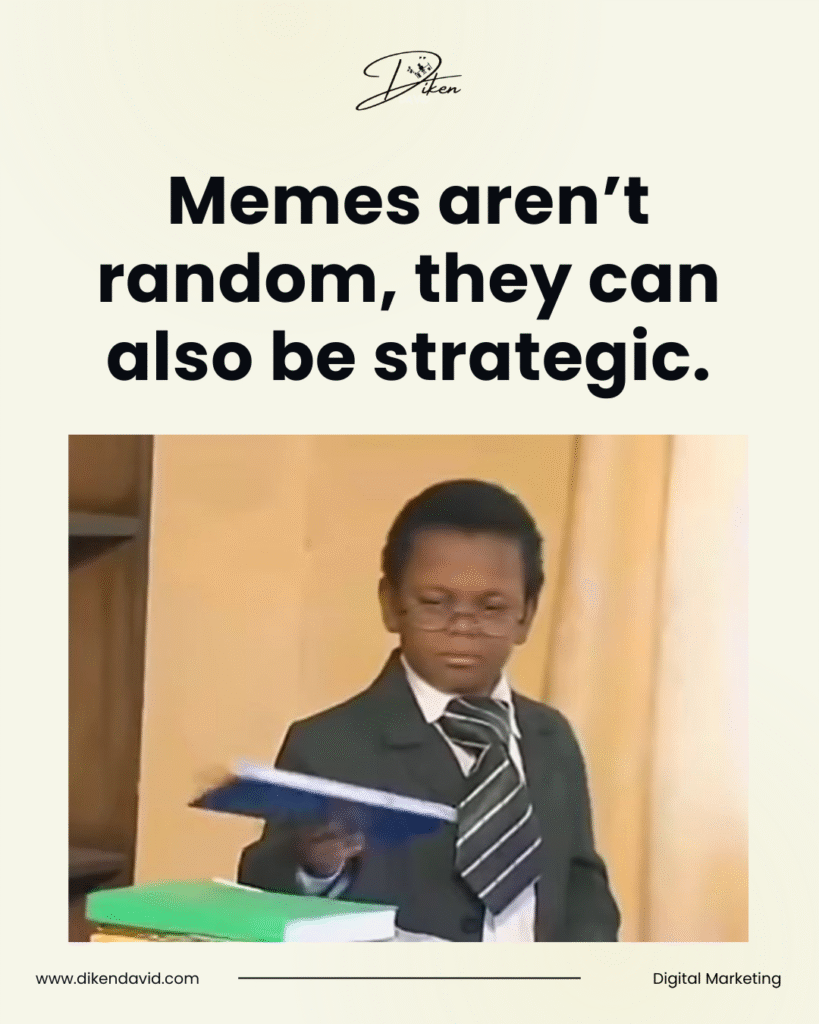
Maybe you’ve wondered; why do corporate social media accounts post memes? You know, memes aren’t just funny pictures anymore. They are now necessary for brands that want to connect with their followers, and grow organically online.
Memes first started on early internet forums. They became popular for being humorous and quick, but still packed with meaning. This is exactly why brands are now using them strategically, not just casually.

HOW DO MEMES WORK IN MARKETING?
- They’re highly relatable and shareable:
Memes capture shared experiences, emotions, or cultural moments that resonate with many people. When someone sees a meme that reflects their mood or situation, they don’t just like it. They re-share it, tag friends, or save it for later. This organic sharing is one of the reasons memes from corporate businesses spread so widely and quickly without ads. All that is done is the company’s logo inserted into the design and people who enjoy the memes can trace it to its source, then follow and see what else the business does.
- They feel authentic:
The regular traditional ad often feels over polished and distant. Memes feel real, are culturally relatable, and conversational. They mirror everyday online behavior, so when a brand uses them well, audiences feel like that brand gets them and speaks their language. This human touch is great for brand personality, and makes engagement more natural.
- They are cost-effective:
Using a clever caption and a trendy meme image can outperform an expensive, highly produced marketing piece. Memes are very budget friendly, yet they have a higher impact due to their unforced tone.
As far back as 2025 and into 2026, data suggests that up to 75% of total engagement on some brand feeds now comes from meme and meme-style content, rather than traditional ad formats or static graphics. Another interesting behaviour is how users send memes as emotional shorthand. Around 36% of people share memes to express emotion, and another 35% use memes like “codes” that communicate subtle meaning within social groups. This shows how powerful memes are at speaking in the language people already use to communicate digitally.
HOW ARE BRANDS USING MEME MARKETING TODAY?
A worthy case study is Duolingo, the language learning app. They have leaned into meme culture by making humor part of their social voice. Their content is playful, self-aware, and often meme-driven, which helps them stay visible and shareable.
Netflix also turns scenes from their most popular shows into memes that fans instantly recognize and share, turning passive viewers into active participants in the brand’s online narrative.
THE SAD MISCONCEPTION
One misconception about meme marketing is that memes are trivial/unserious. But the reality is that memes build personality. When a meme resonates with your audience, it shows that your brand is communicating with them.
HOW SMALL BRANDS CAN USE MEMES, TOO
Small brands and SMEs can start by listening first. Use the internet, use AI tools, and see what jokes, phrases, or moments your audience is already relating with. When you spot a pattern, you can then re-create memes like that in your voice.
The key is to align humor with relevance to your audience. If a meme reflects what your customers already think or feel, and you add a subtle brand twist; it becomes both entertaining and effective.
Note that while memes are powerful, they are not a full replacement for strategy. Traditional content still plays a role in building trust and showing your expertise.
CONCLUSION
Although they were once seen as informal, meme marketing is now a real marketing hack in social media marketing. It connects emotionally, spreads quickly, and gives brands a relatable voice. When used thoughtfully, these memes don’t just win laughs. Instead, they help you build trusting relationships, and drive real engagement.